FG Expands Fourth Legacy Highway By 400km, Approves Lagos-Ibadan Expressway Rebuild
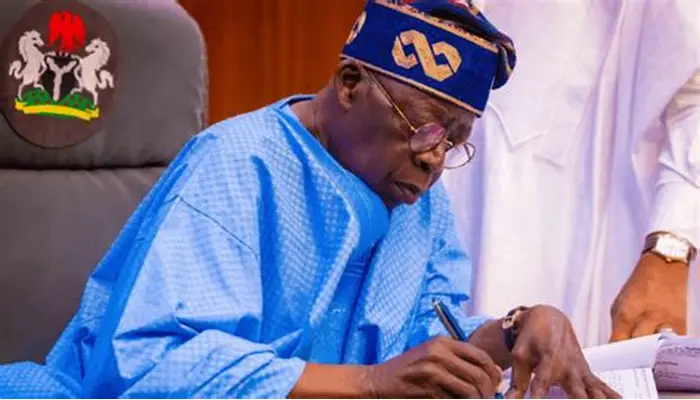
The Federal Government has approved a 400-kilometre extension of the Fourth Legacy Highway into Taraba State and ordered the complete reconstruction of the Lagos-Ibadan Expressway as part of a fresh push to strengthen the nation's road infrastructure.
Minister of Works, David Umahi, announced the approvals on Thursday, saying President Bola Tinubu gave the green light for the projects on Wednesday.
According to Umahi, the extension of the Fourth Legacy Highway will improve connectivity between the North-Central and North-East by extending the route into Taraba State.
He said the highway will pass through several historic communities, including the hometowns of former Head of State Gen. Yakubu Gowon, former Plateau State Governor Chief Solomon Lar and the National Chairman of the All Progressives Congress (APC), before terminating in Taraba.
Originally designed as a dual carriageway linking Akwanga in Nasarawa State with Maiduguri in Borno State through Plateau, Bauchi, Gombe and Biu, the project will now stretch an additional 400 kilometres into Taraba.
Umahi also disclosed that President Tinubu approved the reconstruction of the Lagos-Ibadan Expressway after portions of the highway began deteriorating less than five years after rehabilitation.
He said the decision reinforces the Federal Government's preference for reinforced concrete pavement on strategic highways, describing it as more durable than conventional asphalt.
According to the minister, repeated repairs on the 135-kilometre dual carriageway have failed to resolve the road's structural problems.
He said reinforced concrete pavement would provide a lasting solution, with an expected lifespan of between 50 and 100 years and minimal maintenance requirements.
The minister further announced presidential approval for the review and completion of the abandoned Ibi Bridge project in Taraba State.
Awarded in 2018, the project had reached about 40 per cent completion before work was suspended.
He added that approval had also been granted for the design, procurement and construction of the 5.76-kilometre Lau Bridge across the Benue River in Taraba State.
In another infrastructure intervention, Umahi said the President approved the dualisation of a 400-kilometre section of the East-West Road corridor from Lokoja to Benin to improve traffic flow, enhance safety and facilitate trade.
The minister also announced that the Lagos-Calabar Coastal Highway has been renamed the President Bola Ahmed Tinubu Coastal Highway in recognition of the President's long-standing vision for the project.
He noted that Tinubu conceived the coastal highway more than two decades ago while serving as Governor of Lagos State and has now overseen its implementation.
Giving an update on the 750-kilometre project, Umahi said construction is progressing simultaneously across multiple sections.
He disclosed that the first section, stretching from Victoria Island to Eleko Village in Lagos State, has become a model of modern highway construction, while the second section from Eleko Village to the Lagos-Ogun boundary is about 60 per cent complete and is expected to be substantially delivered by the end of November, with only some complex bridge works outstanding.
According to the minister, the corridor includes several long-span bridges designed to withstand heavy industrial traffic, particularly around the Dangote Refinery axis.
He added that work is also advancing on sections of the highway in Cross River, Akwa Ibom, Ogun and Ondo states, with Section Three in Cross River about 30 per cent complete and Section Four through Ogun and Ondo reaching approximately 20 per cent completion.
Umahi further highlighted progress on the 1,068-kilometre Sokoto-Badagry Super Highway, describing it as the fulfilment of a vision conceived during the Shehu Shagari administration more than five decades ago.
He said the highway is expected to reduce travel time between Sokoto and Lagos to about 10 hours at an average speed of 100 kilometres per hour.
The minister also provided updates on the Trans-Sahara Highway, noting that ongoing works across Ebonyi, Benue, Enugu and Kogi states would significantly improve connectivity between the South-East and the Federal Capital Territory.
The Federal Government's Legacy Projects include the Lagos-Calabar Coastal Highway, Sokoto-Badagry Super Highway, Trans-Sahara Highway and the Akwanga-Maiduguri Highway.
The Tinubu administration has identified the projects as key components of its Renewed Hope Agenda aimed at improving national connectivity, stimulating economic growth and reducing long-term road maintenance costs through the use of reinforced concrete pavement.
Minister of Works, David Umahi, announced the approvals on Thursday, saying President Bola Tinubu gave the green light for the projects on Wednesday.
According to Umahi, the extension of the Fourth Legacy Highway will improve connectivity between the North-Central and North-East by extending the route into Taraba State.
He said the highway will pass through several historic communities, including the hometowns of former Head of State Gen. Yakubu Gowon, former Plateau State Governor Chief Solomon Lar and the National Chairman of the All Progressives Congress (APC), before terminating in Taraba.
Originally designed as a dual carriageway linking Akwanga in Nasarawa State with Maiduguri in Borno State through Plateau, Bauchi, Gombe and Biu, the project will now stretch an additional 400 kilometres into Taraba.
Umahi also disclosed that President Tinubu approved the reconstruction of the Lagos-Ibadan Expressway after portions of the highway began deteriorating less than five years after rehabilitation.
He said the decision reinforces the Federal Government's preference for reinforced concrete pavement on strategic highways, describing it as more durable than conventional asphalt.
According to the minister, repeated repairs on the 135-kilometre dual carriageway have failed to resolve the road's structural problems.
He said reinforced concrete pavement would provide a lasting solution, with an expected lifespan of between 50 and 100 years and minimal maintenance requirements.
The minister further announced presidential approval for the review and completion of the abandoned Ibi Bridge project in Taraba State.
Awarded in 2018, the project had reached about 40 per cent completion before work was suspended.
He added that approval had also been granted for the design, procurement and construction of the 5.76-kilometre Lau Bridge across the Benue River in Taraba State.
In another infrastructure intervention, Umahi said the President approved the dualisation of a 400-kilometre section of the East-West Road corridor from Lokoja to Benin to improve traffic flow, enhance safety and facilitate trade.
The minister also announced that the Lagos-Calabar Coastal Highway has been renamed the President Bola Ahmed Tinubu Coastal Highway in recognition of the President's long-standing vision for the project.
He noted that Tinubu conceived the coastal highway more than two decades ago while serving as Governor of Lagos State and has now overseen its implementation.
Giving an update on the 750-kilometre project, Umahi said construction is progressing simultaneously across multiple sections.
He disclosed that the first section, stretching from Victoria Island to Eleko Village in Lagos State, has become a model of modern highway construction, while the second section from Eleko Village to the Lagos-Ogun boundary is about 60 per cent complete and is expected to be substantially delivered by the end of November, with only some complex bridge works outstanding.
According to the minister, the corridor includes several long-span bridges designed to withstand heavy industrial traffic, particularly around the Dangote Refinery axis.
He added that work is also advancing on sections of the highway in Cross River, Akwa Ibom, Ogun and Ondo states, with Section Three in Cross River about 30 per cent complete and Section Four through Ogun and Ondo reaching approximately 20 per cent completion.
Umahi further highlighted progress on the 1,068-kilometre Sokoto-Badagry Super Highway, describing it as the fulfilment of a vision conceived during the Shehu Shagari administration more than five decades ago.
He said the highway is expected to reduce travel time between Sokoto and Lagos to about 10 hours at an average speed of 100 kilometres per hour.
The minister also provided updates on the Trans-Sahara Highway, noting that ongoing works across Ebonyi, Benue, Enugu and Kogi states would significantly improve connectivity between the South-East and the Federal Capital Territory.
The Federal Government's Legacy Projects include the Lagos-Calabar Coastal Highway, Sokoto-Badagry Super Highway, Trans-Sahara Highway and the Akwanga-Maiduguri Highway.
The Tinubu administration has identified the projects as key components of its Renewed Hope Agenda aimed at improving national connectivity, stimulating economic growth and reducing long-term road maintenance costs through the use of reinforced concrete pavement.