182 Women’s Reserved Seats: Lawmakers, CSOs Clash Over Proposed Constitutional Amendment
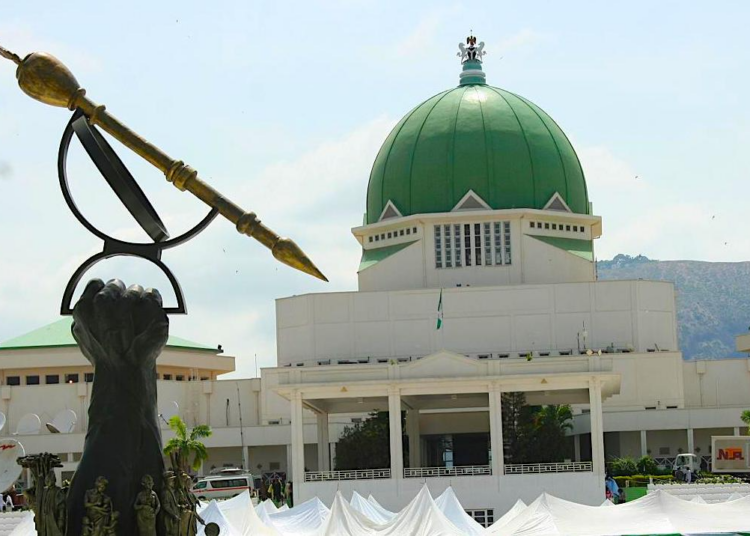
The National Assembly’s proposal to create 182 additional legislative seats exclusively for women has sparked divergent reactions among lawmakers, civil society organisations (CSOs), women’s rights advocates and political stakeholders, with supporters describing it as a historic opportunity to address gender imbalance in Nigerian politics, while critics insist the allocation falls short of the level of representation women deserve.
The proposed Reserved Seats for Women Bill seeks to amend the 1999 Constitution by creating 182 additional seats across the federal and state legislatures. The arrangement provides for 37 additional seats each in the Senate and House of Representatives, with one seat reserved for women in every state and the Federal Capital Territory.
At the state level, three additional seats would be created in each of the 36 Houses of Assembly, distributed across the senatorial districts.
The proposal translates to 74 additional seats at the federal level and 108 across the state legislatures. The seats would be additional to existing positions, become operational after the expiration of current legislative tenures and undergo review every 16 years.
The bill is among 44 prioritised constitutional amendment proposals before the 10th National Assembly.
The debate comes amid the poor representation of women in Nigerian politics. Women currently occupy only four of the 109 seats in the Senate and 14 of the 360 seats in the House of Representatives. At the state level, only 48 women emerged victorious in the 2023 general elections out of 988 assembly seats nationwide.
Supporters Demand Passage Of Bill
The lawmaker representing Kosofe Federal Constituency, Lagos State, Kafilat Ogbara, urged the National Assembly to pass the bill, arguing that greater female participation in governance is essential to national development.
She said decades of conferences, workshops and commitments had failed to produce meaningful improvements because Nigeria's political system remained largely exclusionary.
According to her, women are not underrepresented because they lack the capacity, interest or vision to lead, but because the political structure has failed to provide equal opportunities.
Former National Chairman of the Youth Democratic Party, Georgina Dakpokpo, described the proposal as transformative, although she admitted that it would not guarantee proportional representation.
She said increased female participation would strengthen legislation on maternal health, education, gender-based violence and economic inclusion.
Similarly, a member of the International Federation of Women Lawyers (FIDA), Rahila Dauda, described Nigeria's poor record of female representation as embarrassing and called on lawmakers to pass the bill without further delay.
The Executive Director of the Women’s Inclusion, Empowerment and Leadership Development Initiative (WIELD-I) also supported the proposal, identifying high nomination fees, inadequate campaign financing, discriminatory party structures, political intimidation and exclusion from decision-making as major obstacles confronting female aspirants.
She, however, warned that the initiative could be hijacked by political interests without transparent implementation and adequate safeguards for young women, women with disabilities and those from disadvantaged backgrounds.
She insisted that the proposed 74 federal seats should represent a starting point rather than a limit to women's political participation.
State Stakeholders Divided Over Allocation
Across the states, several lawmakers and women's groups welcomed the proposal but questioned whether the allocation of three additional seats per state assembly would be sufficient to address longstanding inequalities.
In Imo State, activist Peace Dike of Virgin Heart described the bill as an opportunity to correct years of political exclusion but cautioned against politicians using the reserved positions to install their wives and associates.
The lawmaker representing Okigwe North Federal Constituency, Miriam Onuoha, also backed the proposal, citing her legislative performance as evidence of women's capacity to contribute meaningfully to governance.
She disclosed that she sponsored 23 bills in her first year, arguing that more women in the legislature would strengthen representation and improve lawmaking.
In Bayelsa, lawmaker Ebizi Ndiomu-Brown said the reserved seats would provide women with a pathway to greater political participation but insisted that they must have a decisive role in selecting their representatives.
In Benue, where women occupy only two seats in the state assembly and two in the House of Representatives, lawmakers expressed support for the proposal, while urging political parties to produce credible female candidates.
However, women's groups in Oyo State argued that three additional seats would not be enough, identifying patriarchal structures, cultural expectations, financial constraints and discrimination within political parties as major barriers.
In Akwa Ibom, activists lamented the absence of female representatives from the state's three senatorial districts and 10 federal constituencies in the National Assembly, describing the situation as political injustice.
Plateau FIDA Chairperson, Naankus Fyaktu, described the proposal as commendable but inadequate, while her Taraba counterpart, Maijankai Shallom Donald, urged lawmakers to ensure that the reserved positions are filled through direct elections rather than appointments by governors.
Donald said the proposed federal allocation would account for approximately 15.7 per cent of the National Assembly's 469 seats, leaving women significantly underrepresented.
In Ondo State, lawmaker Atinuke Morenikeji Witherspoon rejected the proposed allocation, insisting that women deserved more seats.
Kogi lawmaker Comfort Egwaba Nwuchola, however, described the proposed increase in female representation in the state assembly as an improvement, while lawyer Lilian Okolo advocated for 12 women in the 36-member legislature.
In Kaduna, the state's only female lawmaker, Munira Suleiman Tanimu, called for additional seats across all 23 local government areas.
Kwara stakeholders welcomed the proposal, while activists in Enugu supported the amendment but warned against political manipulation.
In Osun, some stakeholders argued that removing financial and security barriers to political participation would provide a more sustainable solution than creating reserved seats.
Cross River FIDA Chairperson, Affiong Onung, and former lawmaker Itam Abang also considered the proposed allocation insufficient but urged women to accept it as a starting point.
Former federal lawmaker Asabe Vilita, speaking on the situation in Borno, said women were not seeking to compete with men but wanted adequate representation in governance.
Former Ogun State Speaker, Titi Oseni, also welcomed the initiative, saying it could encourage women facing financial and domestic pressures to seek elective positions.
In Ekiti, lawmaker Mariam Ogunlade and National Association of Women Journalists (NAWOJ) Chairperson, Adewumi Ademiju, urged the National Assembly to pass the bill without delay.
Ademiju, however, demanded at least 35 per cent female representation in line with the National Gender Policy.
Stakeholders in Rivers State also welcomed the proposal, while women's rights advocate Gambo Ahmed Mustafa lamented that none of the 40 members of the Kano State House of Assembly was female.
In Nasarawa, stakeholders supported the amendment but called for more seats, with Esther Andrew advocating 14 female lawmakers in the state's 24-member assembly.
Women Demand 35% Representation, Transparency
Former presidential candidate Funmilayo Adesanya-Davies described the proposed 182 seats as historic but maintained that the allocation should be regarded as a minimum provision rather than the ultimate target.
She said Nigerian women had demanded special seats and affirmative action for more than two decades, adding that the proposal represented the first concrete step towards addressing their political exclusion.
Adesanya-Davies argued that the 74 federal seats would account for only about 15.7 per cent of the National Assembly, far below the 35 per cent affirmative action target and women's share of the population.
She called for stronger safeguards to prevent governors, political godfathers and party leaders from turning the reserved positions into rewards for loyalists and relatives.
Beyond the number of seats, stakeholders have also raised concerns about the process of selecting representatives, their legislative powers and the duration of the arrangement.
While some advocate direct elections, others insist that women must have a decisive role in selecting candidates through transparent and credible procedures.
They also demand equal legislative rights, access to committees and opportunities for leadership positions for women elected through the proposed arrangement.
Despite their differences, stakeholders largely agree that reserved seats alone cannot eliminate the barriers confronting women in Nigerian politics.
They have called for broader electoral reforms, affordable nomination forms, improved access to campaign financing, stronger political party structures and protection against political violence.
For many advocates, the central issue is not whether women should be given special political privileges, but whether Nigeria's democracy can achieve meaningful representation while excluding a significant proportion of its population.
Whether the proposed 182 seats will become a turning point in women's political participation or another unfulfilled constitutional promise will depend on the National Assembly's decision and the transparency of the eventual implementation process.