Obi–Kwankwaso One-Term Agreement Sparks Mixed Reactions In The North
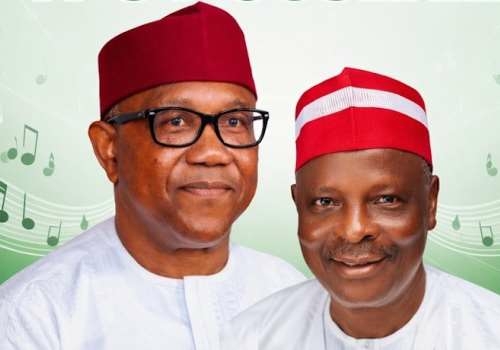
A reported one-term agreement between the Nigerian Democratic Congress (NDC) presidential candidate, Peter Obi, and his running mate, Senator Rabiu Kwankwaso, has generated contrasting reactions from northern groups and legal experts ahead of the 2027 general election.
Kwankwaso recently disclosed that Obi signed a written commitment to serve only one four-year term if elected president, saying the arrangement was intended to uphold the principle of power rotation between the South and the North. He expressed confidence that Obi would honour the agreement.
The disclosure has, however, divided opinion across the North.
The Arewa Consultative Forum (ACF) criticised the arrangement, describing it as unconstitutional, politically motivated and incapable of securing northern support. The forum argued that Nigeria's Constitution provides for a renewable four-year presidential tenure and that no private agreement can prevent an elected president from seeking re-election.
Speaking on behalf of the forum, ACF spokesman Prof. Tukur Muhammad Baba said the presidency is determined by the Constitution and the electorate, not by personal agreements between politicians. He also maintained that neither Obi nor Kwankwaso had the mandate to negotiate power-sharing on behalf of Nigerians.
In contrast, the Middle Belt Forum (MBF) welcomed the reported agreement, saying it aligns with the principle of power rotation. The group stated that if Obi serves a single term, power should return to the North in 2031, specifically to the Middle Belt.
MBF spokesman Luka Binniyat argued that the Middle Belt should produce the next president after 2031, noting that the region has consistently advocated equitable power distribution since the return to democratic rule.
Legal practitioners also weighed in on the issue, insisting that such an agreement carries no constitutional force. Senior Advocate of Nigeria Abdul Balogun said the 1999 Constitution recognises only a four-year tenure with the possibility of one re-election, adding that any private arrangement outside the Constitution is not legally enforceable.
Other lawyers, including Hillary Omoh and James Ekwe, described the reported pact as a gentleman's agreement that depends solely on the willingness of the individual involved to honour it.
They stressed that there is no legal mechanism preventing a president from seeking a second term if eligible under the Constitution.
The reported agreement has therefore intensified debate over zoning, power rotation and constitutional provisions as political parties continue preparations for the 2027 presidential election.
Kwankwaso recently disclosed that Obi signed a written commitment to serve only one four-year term if elected president, saying the arrangement was intended to uphold the principle of power rotation between the South and the North. He expressed confidence that Obi would honour the agreement.
The disclosure has, however, divided opinion across the North.
The Arewa Consultative Forum (ACF) criticised the arrangement, describing it as unconstitutional, politically motivated and incapable of securing northern support. The forum argued that Nigeria's Constitution provides for a renewable four-year presidential tenure and that no private agreement can prevent an elected president from seeking re-election.
Speaking on behalf of the forum, ACF spokesman Prof. Tukur Muhammad Baba said the presidency is determined by the Constitution and the electorate, not by personal agreements between politicians. He also maintained that neither Obi nor Kwankwaso had the mandate to negotiate power-sharing on behalf of Nigerians.
In contrast, the Middle Belt Forum (MBF) welcomed the reported agreement, saying it aligns with the principle of power rotation. The group stated that if Obi serves a single term, power should return to the North in 2031, specifically to the Middle Belt.
MBF spokesman Luka Binniyat argued that the Middle Belt should produce the next president after 2031, noting that the region has consistently advocated equitable power distribution since the return to democratic rule.
Legal practitioners also weighed in on the issue, insisting that such an agreement carries no constitutional force. Senior Advocate of Nigeria Abdul Balogun said the 1999 Constitution recognises only a four-year tenure with the possibility of one re-election, adding that any private arrangement outside the Constitution is not legally enforceable.
Other lawyers, including Hillary Omoh and James Ekwe, described the reported pact as a gentleman's agreement that depends solely on the willingness of the individual involved to honour it.
They stressed that there is no legal mechanism preventing a president from seeking a second term if eligible under the Constitution.
The reported agreement has therefore intensified debate over zoning, power rotation and constitutional provisions as political parties continue preparations for the 2027 presidential election.