Three Years After Tinubu’s Food Emergency Declaration, High Costs, Insecurity Deepen Food Crisis
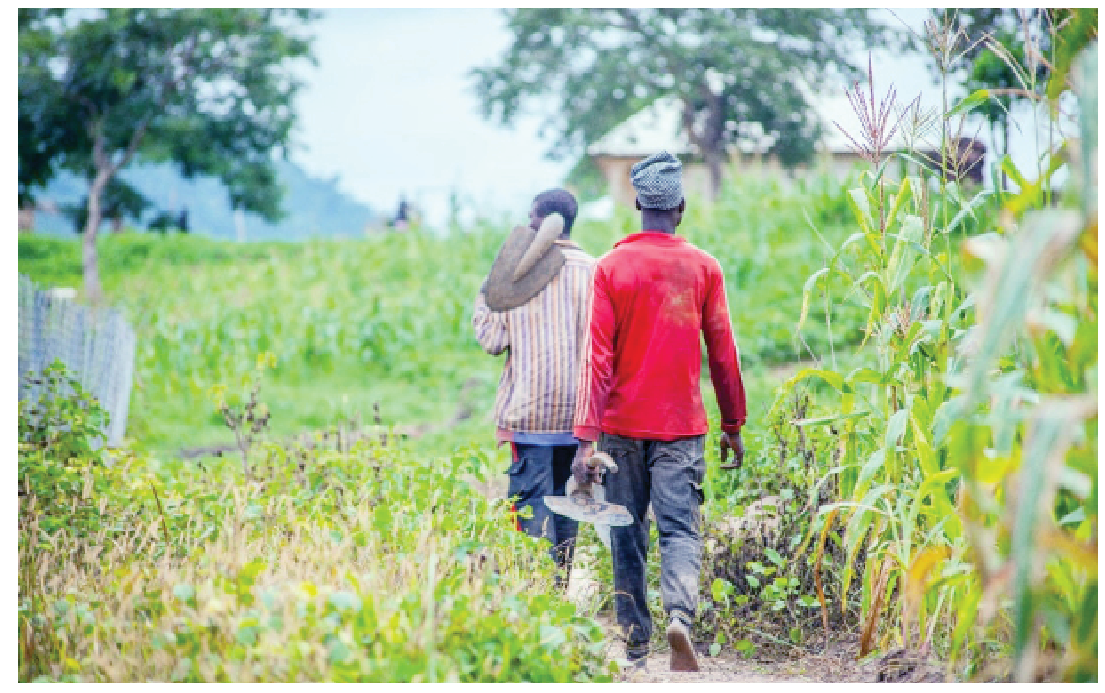
Three years after President Bola Tinubu declared a state of emergency on food security, soaring agricultural input costs, insecurity and limited access to government support continue to undermine efforts to make food affordable in Nigeria.
The emergency declaration, made on July 13, 2023, was designed to boost agricultural production, improve food availability and reduce the cost of essential commodities. However, farmers and market operators say the impact of the interventions has yet to translate into meaningful relief for millions of Nigerians.
Despite several government initiatives, including the recapitalisation of the Bank of Agriculture (BOA), the National Agricultural Growth Scheme and Agro-Pocket (NAGS-AP), increased funding for the National Agricultural Development Fund (NADF), a 2,000-tractor mechanisation programme and the Guaranteed Minimum Price (GMP) scheme, the cost of farming has continued to rise.
The Federal Government has claimed that NAGS-AP generated 2.53 million metric tonnes of crops worth N2.31 trillion across four farming seasons. The programme focuses on six staple crops: wheat, rice, maize, sorghum, soybean and cassava.
In February 2026, Minister of State for Agriculture and Food Security, Aliyu Sabi Abdullahi, disclosed the figures, citing the scheme’s contribution to the government’s food security intervention.
However, increased production figures have not necessarily translated into lower cultivation costs or affordable food for consumers.
A market survey by LEADERSHIP showed that the prices of fertilisers, agrochemicals and tractor services had risen significantly, increasing the financial burden on farmers.
A 50kg bag of urea fertiliser, which sold for between N40,000 and N46,500 in 2025, now costs between N47,500 and N55,000. NPK 20:10:10 has risen from N35,000–N40,000 to N38,000–N45,000, while NPK 15:15:15 now sells for between N55,000 and N64,000, compared with N40,000–N50,000 previously.
Agrochemicals have also become more expensive, rising from N2,000–N4,000 per litre in 2023 to N5,000–N7,000 in 2026, depending on the brand.
Similarly, tractor-hiring costs for ploughing a plot of land in the Federal Capital Territory and Nasarawa State have doubled from approximately N5,000 in 2023 to N10,000.
The rising expenses mean farmers must invest more before planting and harvesting, exposing them to greater financial risks when yields are poor or market prices fail to cover production costs. These pressures can ultimately feed into higher food prices.
Although the Minister of Agriculture and Food Security, Abubakar Kyari, recently claimed that prices of essential food items had dropped by as much as 50 per cent compared with pre-2023 levels, traders and food sellers interviewed in a separate LEADERSHIP report disputed the assertion.
For many farmers, government support has also remained difficult to access.
Peter Abraham, a maize farmer in Orozo, Abuja, said he had yet to benefit from any government agricultural intervention.
“I think the government intervention is only reaching a privileged few; I am yet to benefit from any intervention, if any exist,” he said.
Another farmer, Joseph Audu, who cultivates beans, said farming had become considerably more expensive since the emergency declaration.
“I can say things were better in 2023 than now. I spent less to plant that time than now; the cost of fertiliser and chemicals (agro) has increased, and even the money we pay labourers has gone up as well,” he said.
Beyond rising input costs, insecurity continues to threaten agricultural production across parts of the North-West, North-Central and North-East. Farmers in affected communities face restricted access to their farmlands, displacement and disruptions to planting and harvesting.
A September 2026 assessment by the United Nations Food and Agriculture Organisation (FAO) identified insecurity and high agricultural input costs among the factors undermining food production and access in Nigeria.
The agency estimated that nearly 36.3 million Nigerians faced severe acute food insecurity during the June-to-August 2026 lean season. It also reported that annual food inflation rose to 20.3 per cent in July, from 8.9 per cent in January.
The All Farmers Association of Nigeria (AFAN) has called for agricultural growth figures to be assessed against their actual impact on farmers’ productivity, earnings and access to food.
AFAN’s Deputy National President, Daniel Okafor, said fertilisers, seeds, labour, transportation and machinery remained expensive, while insecurity continued to prevent farmers in some areas from safely accessing their land.
He urged the government to strengthen collaboration with farmers’ organisations and ensure that agricultural policies address the practical challenges confronting producers.
“Government support should translate into practical interventions that reach the farmer at the grassroots, particularly in the areas of affordable agricultural financing, quality inputs, mechanisation, irrigation, extension services, storage, processing, rural infrastructure, security and market access,” Okafor said.
He added that farmers’ organisations should be involved in the formulation and implementation of agricultural policies to ensure that interventions reflect realities on the ground.
“If farmers cannot work their land safely, it will be difficult to sustain agricultural growth and achieve food security. Therefore, improving security in farming communities must remain a priority,” he said.
As the government continues to pursue its food security agenda, the experiences of farmers and the persistent pressure on household food budgets raise questions about the reach and effectiveness of its interventions.
For many agricultural producers, the challenge is no longer simply increasing output but ensuring that farming becomes affordable, farmlands are secure and higher production translates into accessible food for Nigerians.